About Psybersafe
If you have ever paid for cyber training and quietly wondered whether it changed anything, this page is for you.
You have probably done it before. Bought the course, sent the link round, watched the team click through it, and ticked the box for the auditor. Job done.
Then a few weeks later someone still clicks the link they should not. The password is still the one from three jobs ago. And you are left with an uncomfortable thought: you have spent money on training, and your biggest risk, the way people actually behave, has not really moved.
You are not imagining it. Most cyber training was never built to change behaviour. It was built to be delivered.
The old way, and a better one
Most training optimises for coverage. More modules, more topics, more boxes ticked, so the report looks thorough. We optimised for something harder to fake: whether your people actually do the safe thing when it matters.
That is a different job. Knowing what a phishing email is, and reporting one when you are busy and under pressure, are not the same skill. One is information. The other is behaviour. Almost every course on the market stops at the first and hopes for the second.
Why we exist
Psybersafe exists because we kept running into that gap.
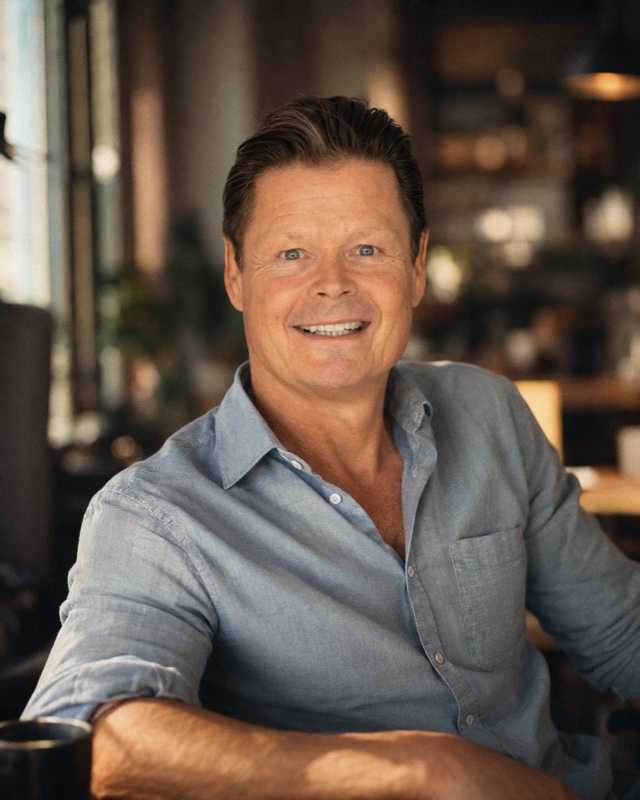
Our founder, Mark Brown, spent more than 25 years in financial services, risk and technology, watching organisations spend heavily on tools while the human side of security stayed stubbornly the same. Fascinated by why people behave the way they do, he went back to university for a degree in psychology and worked with the behavioural scientists at University College London's Centre for Behaviour Change.
The pattern was always the same. The problem was rarely that people did not know. It was that knowing did not change what they did on a busy Tuesday. So we stopped building another course and started building for behaviour, drawing on the same science used to shift habits in health and public policy (COM-B, MINDSPACE, Cialdini's principles of influence, Kahneman's fast and slow thinking) and pointing it at the everyday moments where security is won or lost. Mark is also a partner at the Online Influence Institute and a Master trainer with the Cialdini Institute, so the science under the bonnet is the real thing.
What we chose, and what it costs us
- We sell fewer things, on purpose. We could ship a library of a thousand modules and let it gather dust. We do not. We take a smaller set of behaviours, go deeper, and measure whether they stick. If you want the biggest content library, you will find one elsewhere.
- We refuse to use fear. Scaring people is the quick way to get attention and a poor way to build lasting habits, so we do not do cyber-doom, even though it sells.
- We measure the awkward number. Before and after surveys that show real behaviour change, not completion rates that always look good. The honest measure is sometimes the harder sell. We use it anyway.
- No multi-year lock-in. If it is not working for your people, you should be free to leave. That belief costs us the comfort of a long contract, and we think it is the right call.
Who this suits
This way of working suits organisations that care more about the result than the box. We have used it with a ten-person charity and with thousands of people inside BNP Paribas Fortis, one of Belgium's leading banks.
In one client phishing test, people who followed Psybersafe were 67.5% more likely to report a phishing email. As one customer told us, they could see the change in attitude and behaviour already.
The quiet test
If you think the answer to cyber risk is one more course nobody finishes, we are probably not for you. But if you believe the real work is changing how people behave, and you would rather measure that than tick a box, you will feel at home here.
See it for yourself. Book a free 15-minute call →
Or watch one free episode first.



Designed with University College London's Centre for Behaviour Change. Cyber Essentials certified. Member of the Cyber Resilience Centre for the South East and the Belgian Cyber Security Coalition.
There is a small, dedicated team behind all this. Meet the team.